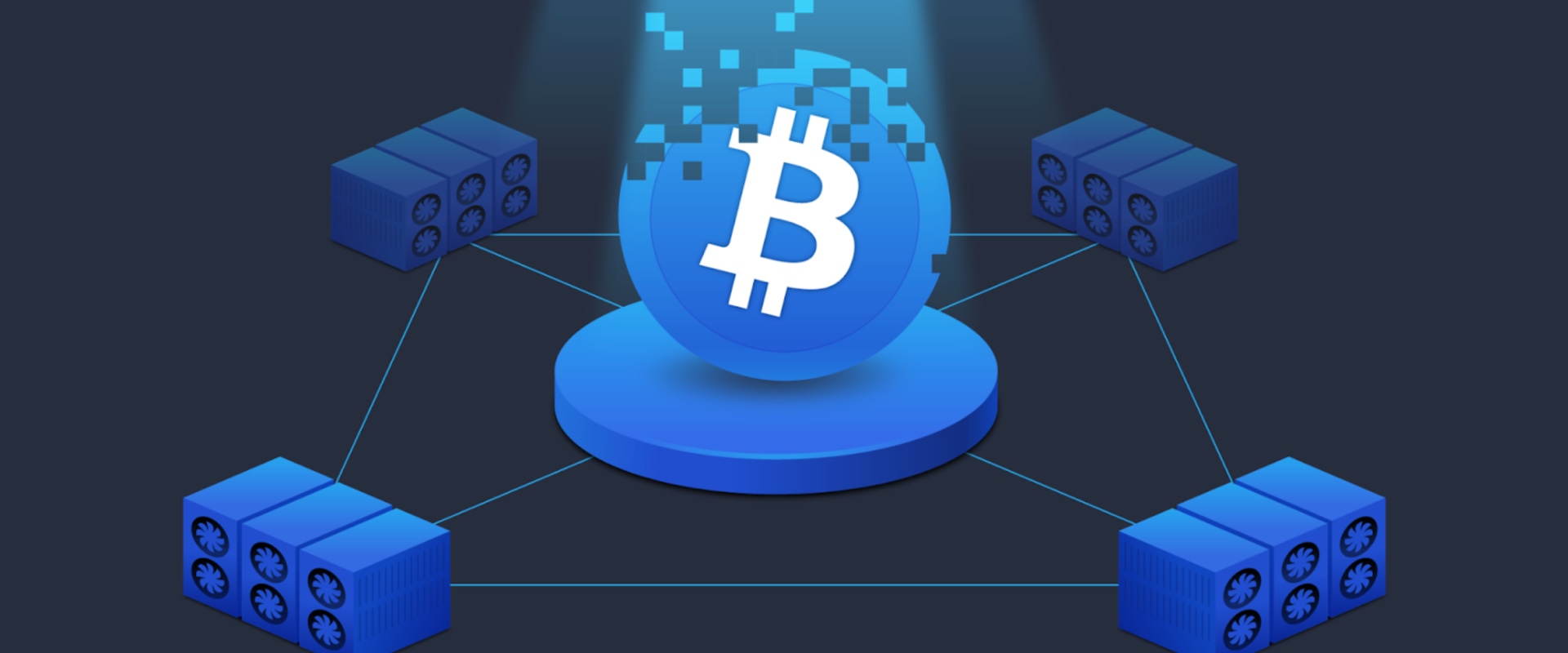
Bitcoin, often referred to as the first decentralized digital currency, has fundamentally transformed the way we perceive and interact with money. Launched in 2009 by an enigmatic figure known as Satoshi Nakamoto, Bitcoin was designed to operate without a central authority, allowing users to send and receive payments directly between themselves. This revolutionary concept not only challenges traditional banking systems but also introduces a new paradigm for financial transactions, making it a pivotal player in the evolving landscape of global finance, especially with innovations like Bitcoin ATMs Truly Anonymous An In-Depth Expert.At its core, Bitcoin, often referred to as the first decentralized digital currency, has fundamentally transformed the way we perceive and interact with money. Launched in 2009 by an enigmatic figure known as Satoshi Nakamoto, Bitcoin was designed to operate without a central authority, allowing users to send and receive payments directly between themselves. This revolutionary concept not only challenges traditional banking systems but also introduces a new paradigm for financial transactions, making it a pivotal player in the evolving landscape of global finance, especially with innovations like Bitcoin ATMs Truly Anonymous An In-Depth Expert. At its core, Bitcoin is built on a technology called blockchain, which serves as a public ledger for all transactions. This decentralized ledger ensures that every transaction is recorded transparently and securely, providing users with confidence in the integrity of their financial exchanges.
Unlike conventional currencies that are subject to inflation and government control, Bitcoin operates on a fixed supply model, with a maximum of 21 million coins that can ever be mined. This scarcity has contributed to its appeal as a store of value and an investment asset. The significance of Bitcoin extends beyond its role as a currency; it represents a shift towards greater financial autonomy for individuals. As more people become aware of the limitations and risks associated with traditional banking systems, Bitcoin offers an alternative that empowers users to take control of their finances. Whether used for online purchases, remittances, or as an investment vehicle, Bitcoin is reshaping our understanding of money and value in the digital age.
The History of Bitcoin
The inception of Bitcoin can be traced back to 2008 when an individual or group operating under the pseudonym Satoshi Nakamoto published a white paper titled "Bitcoin: A Peer-to-Peer Electronic Cash System." This document outlined the fundamental principles of a decentralized digital currency that would allow for direct transactions between users without the need for intermediaries like banks.The motivation behind creating Bitcoin was to provide a solution to the issues of trust and security in traditional financial systems, particularly in the wake of the 2008 financial crisis. In January 2009, Nakamoto mined the first block of the Bitcoin blockchain, known as the "genesis block." This marked the official launch of Bitcoin as a functioning cryptocurrency. The genesis block contained a hidden message referencing a headline from The Times newspaper, which read: "Chancellor on brink of second bailout for banks." This message underscored the discontent with conventional banking practices and highlighted Bitcoin's purpose as an alternative financial system. As Bitcoin began to gain traction, it attracted attention from early adopters and tech enthusiasts. In 2010, the first real-world transaction using Bitcoin occurred when a programmer named Laszlo Hanyecz paid 10,000 Bitcoins for two pizzas. This event is often celebrated as a significant milestone in Bitcoin's history, marking its transition from a theoretical concept to a practical currency. Over the years, Bitcoin has undergone significant evolution.
In 2011, other cryptocurrencies began to emerge, inspired by Bitcoin's success. This led to the development of various altcoins, each with unique features and purposes. By 2013, Bitcoin reached a market capitalization of over $1 billion, drawing further interest from investors and media outlets. In subsequent years, Bitcoin faced numerous challenges, including regulatory scrutiny and security breaches at exchanges. However, these obstacles only fueled its growth and adoption.
By 2017, Bitcoin experienced an unprecedented surge in value, reaching nearly $20,000 per coin. This dramatic rise brought mainstream attention to cryptocurrencies and solidified Bitcoin's position as the leading digital currency. Today, Bitcoin continues to evolve with advancements in technology and increasing acceptance among businesses and consumers. Understanding the history of Bitcoin is essential for grasping its current relevance in the financial landscape and its potential future impact on global economies.
How Bitcoin Works
To understand how Bitcoin works, it is essential to grasp the underlying technology and processes that facilitate its transactions. At its core, Bitcoin operates on a decentralized network known as the blockchain, which serves as a public ledger for all transactions.This ledger is maintained by a network of computers, referred to as nodes, that validate and record each transaction. When a user initiates a Bitcoin transaction, they create a digital message that includes the amount of Bitcoin being sent, the recipient's Bitcoin address , and their own digital signature. This signature is generated using the sender's private key, ensuring that only the owner of the Bitcoin can authorize the transaction. Once created, this transaction is broadcasted to the network. Upon receiving the transaction, nodes verify its authenticity by checking several factors:
- The sender has sufficient balance to cover the transaction.
- The digital signature is valid and corresponds to the sender's public key.
- The transaction adheres to the rules of the Bitcoin protocol.
This process is known as Bitcoin mining. The first miner to solve the problem gets to add the block and is rewarded with newly minted Bitcoins and transaction fees from the transactions included in that block. Transaction fees play a crucial role in incentivizing miners to process transactions. Users can choose to include a fee when sending Bitcoin; higher fees typically result in faster processing times as miners prioritize transactions with greater rewards. Once added to the blockchain, a transaction becomes immutable, meaning it cannot be altered or reversed. In summary, understanding how Bitcoin works involves recognizing its reliance on blockchain technology for secure and transparent transactions. . The first miner to solve the problem gets to add the block and is rewarded with newly minted Bitcoins and transaction fees from the transactions included in that block. Transaction fees play a crucial role in incentivizing miners to process transactions. Users can choose to include a fee when sending Bitcoin; higher fees typically result in faster processing times as miners prioritize transactions with greater rewards. Once added to the blockchain, a transaction becomes immutable, meaning it cannot be altered or reversed. In summary, understanding how Bitcoin works involves recognizing its reliance on blockchain technology for secure and transparent transactions.
By utilizing wallets for storage and addresses for sending and receiving funds, users can interact with Bitcoin effectively while navigating its unique ecosystem.
Understanding Blockchain Technology
To truly understand Bitcoin, one must first grasp the concept of blockchain technology. At its core, blockchain is a decentralized digital ledger that records transactions across a network of computers. This technology is revolutionary because it eliminates the need for a central authority, allowing for peer-to-peer transactions that are both secure and transparent. Each block in the blockchain contains a list of transactions, a timestamp, and a reference to the previous block, creating a chain of blocks—hence the name blockchain. This structure ensures that once a transaction is recorded, it cannot be altered or deleted without the consensus of the network.This immutability is one of the key features that enhances the security of Bitcoin.One of the fundamental aspects of blockchain technology is its use of consensus mechanisms. These are protocols that ensure all participants in the network agree on the validity of transactions. The most common consensus mechanism used in Bitcoin is called Proof of Work (PoW). In this system, miners compete to solve complex mathematical problems, and the first to solve it gets to add a new block to the blockchain.
This process not only verifies transactions but also secures the network against fraud and attacks. The decentralized nature of blockchain means that no single entity has control over the entire network. Instead, every participant (or node) maintains a copy of the entire blockchain, which makes it nearly impossible for any malicious actor to manipulate the data. This transparency fosters trust among users, as anyone can verify transactions independently. Moreover, blockchain technology incorporates advanced cryptographic techniques to secure data. Each transaction is encrypted and linked to previous transactions, creating a secure chain that protects against unauthorized access and fraud.
This level of security is particularly important for digital currencies like Bitcoin, where trust in the system is paramount. In summary, understanding blockchain technology is essential for comprehending how Bitcoin operates. Its decentralized ledger system, consensus mechanisms like Proof of Work, and robust security features make it a groundbreaking innovation in financial technology. As we continue to explore the world of cryptocurrencies, recognizing the significance of blockchain will provide valuable insights into their future potential.
The Process of Bitcoin Mining
Bitcoin mining is a fundamental process that underpins the entire Bitcoin network. It involves the use of computational power to solve complex mathematical problems, which in turn validates and secures transactions on the blockchain.This process not only ensures the integrity of the Bitcoin network but also introduces new bitcoins into circulation. At its core, bitcoin mining serves two primary functions: transaction verification and the creation of new bitcoins. When a user initiates a transaction, it is broadcasted to the network where miners compete to validate it. They do this by bundling transactions into blocks and solving a cryptographic puzzle known as a hash. The first miner to solve this puzzle gets to add the block to the blockchain and is rewarded with newly minted bitcoins, along with transaction fees from the transactions included in that block. The mining process can be broken down into several key steps:
- Transaction Collection: Miners collect pending transactions from the Bitcoin network.
- Block Creation: These transactions are grouped into a block.
- Puzzle Solving: Miners compete to solve a complex mathematical problem associated with the block.
- Verification: Once solved, the block is verified by other miners before being added to the blockchain.
Initially, miners received 50 bitcoins for each block mined; this reward has decreased over time and currently stands at 6.25 bitcoins as of 2020. This decreasing reward system is designed to control inflation and ensure that the total supply of bitcoin does not exceed 21 million coins. However, bitcoin mining has come under scrutiny due to its significant environmental impact. The energy consumption required for mining operations is substantial, often relying on fossil fuels, which raises concerns about carbon emissions and sustainability. As more miners join the network and competition increases, so does the energy required to maintain operations.
This has led to discussions within the cryptocurrency community about finding more sustainable methods of mining or transitioning to less energy-intensive consensus mechanisms. In summary, bitcoin mining is a crucial aspect of how Bitcoin operates, ensuring transaction security while also introducing new coins into circulation. However, it is essential to consider both its economic implications and environmental consequences as the cryptocurrency landscape continues to evolve.
Investing in Bitcoin: Risks and Rewards
Investing in Bitcoin has become a hot topic among both seasoned investors and newcomers to the financial world. As with any investment, understanding the potential risks and rewards is crucial for making informed decisions. One of the most significant factors to consider when investing in Bitcoin is its inherent market volatility. The price of Bitcoin can fluctuate dramatically within short periods, influenced by various factors such as market sentiment, regulatory news, and macroeconomic trends.For instance, a positive announcement regarding Bitcoin adoption by a major company can lead to a surge in prices, while negative news can trigger sharp declines. This volatility can present both opportunities for profit and risks of substantial losses. Despite these risks, many investors are drawn to Bitcoin due to its potential for high returns. Historically, Bitcoin has shown remarkable growth since its inception, with early adopters reaping significant rewards. For those willing to adopt a long-term investment strategy, Bitcoin may serve as a hedge against inflation and currency devaluation, especially in uncertain economic climates. When considering an investment in Bitcoin, it is essential to evaluate your risk tolerance and investment goals.
Here are some key points to keep in mind:
- Diversification: As with any investment portfolio, diversifying your assets can help mitigate risks. Consider allocating only a portion of your portfolio to Bitcoin while maintaining investments in other asset classes.
- Research: Stay informed about market trends, technological advancements, and regulatory changes that could impact Bitcoin's value. Knowledge is power when navigating the cryptocurrency landscape.
-
Long-term vs. Short-term: Decide whether you are looking for short-term gains or long-term growth.
Short-term trading can be risky due to price fluctuations, while long-term holding may yield better results if you believe in Bitcoin's future potential.
Using Bitcoin for Transactions
Bitcoin has revolutionized the way we think about money and transactions. As a decentralized digital currency, it allows individuals and businesses to conduct transactions without the need for traditional banking systems. Understanding how to use Bitcoin for purchases and payments is essential for anyone looking to engage with this innovative form of currency. To start using Bitcoin for transactions, you first need a Bitcoin wallet.This digital wallet will store your Bitcoins and allow you to send and receive them. There are several types of wallets available:
- Software Wallets: These are applications that can be installed on your computer or smartphone. They are user-friendly and convenient for everyday transactions.
- Hardware Wallets: These are physical devices that securely store your Bitcoins offline. They are considered one of the safest options for long-term storage.
-
Paper Wallets: This method involves printing your Bitcoin address and private key on paper.
While it is secure from online threats, it can be easily lost or damaged.
Here are some steps to consider:
- Choose a Payment Processor: Services like BitPay or Coinbase Commerce facilitate Bitcoin transactions for businesses, making it easier to accept payments.
- Set Up Your Wallet: Ensure you have a secure wallet to receive payments directly.
- Display Payment Options: Clearly indicate on your website that you accept Bitcoin, and provide instructions for customers on how to pay using this method.
Whether you're making purchases online or accepting payments as a business, understanding how to navigate this digital currency will enhance your financial flexibility in today's evolving economy.
The Future of Bitcoin: Trends and Predictions
The landscape of Bitcoin is constantly evolving, influenced by a myriad of factors including technological advancements, regulatory changes, and market dynamics. As we look towards the future of Bitcoin, several key trends and predictions are emerging that could shape its trajectory in the coming years. One significant trend is the increasing acceptance of Bitcoin by mainstream financial institutions. Major banks and investment firms are beginning to recognize the potential of Bitcoin as a legitimate asset class. This shift is likely to lead to greater institutional investment, which could drive up demand and, consequently, the price of Bitcoin.In 2023, we have already seen several high-profile companies adding Bitcoin to their balance sheets, signaling a growing confidence in its long-term viability. Another important aspect to consider is the regulatory environment surrounding Bitcoin. Governments around the world are grappling with how to regulate cryptocurrencies effectively. While some countries have embraced Bitcoin and blockchain technology, others have imposed strict regulations or outright bans. The future of Bitcoin will largely depend on how these regulatory frameworks evolve.
Experts predict that clearer regulations could foster a more stable market, encouraging wider adoption among both consumers and businesses. Technological advancements also play a crucial role in shaping the future of Bitcoin. Innovations such as the Lightning Network aim to improve transaction speeds and reduce fees, making Bitcoin more practical for everyday use. As these technologies mature, they could enhance Bitcoin's usability and appeal as a medium of exchange. Furthermore, predictions from industry experts suggest that Bitcoin may continue to experience significant price volatility in the short term. However, many analysts believe that as adoption increases and supply becomes more constrained due to halving events, Bitcoin's price could stabilize and potentially reach new all-time highs in the long run. In summary, the future of Bitcoin is poised for growth driven by institutional adoption, evolving regulations, and technological innovations.
While challenges remain, the overall sentiment among experts is optimistic, suggesting that Bitcoin will continue to play a pivotal role in the financial landscape for years to come.
Conclusion: Key Takeaways on Bitcoin
As we conclude our exploration of Bitcoin, it is essential to reflect on the key points that highlight its significance in the modern financial landscape. Bitcoin is not just a digital currency; it represents a paradigm shift in how we perceive and engage with money. First and foremost, Bitcoin's decentralized nature is one of its most revolutionary aspects. Unlike traditional currencies that are governed by central banks, Bitcoin operates on a peer-to-peer network, allowing users to transact directly without intermediaries. This decentralization enhances security and reduces the risk of fraud, making Bitcoin a compelling alternative for those seeking financial autonomy. Another critical takeaway is the role of blockchain technology.The underlying technology that powers Bitcoin ensures transparency and immutability of transactions. Each transaction is recorded on a public ledger, which is accessible to anyone, thereby fostering trust among users. Understanding blockchain is crucial for anyone looking to grasp the full potential of Bitcoin and other cryptocurrencies. Moreover, Bitcoin has emerged as a viable investment option. Its price volatility can present both opportunities and risks for investors.
While some view it as a speculative asset, others consider it a hedge against inflation and economic instability. As such, it is vital for potential investors to conduct thorough research and understand market dynamics before diving into Bitcoin trading. Additionally, managing a Bitcoin wallet requires careful consideration. With various types of wallets available—ranging from software to hardware options—users must prioritize security to protect their assets. Keeping private keys secure and understanding wallet functionalities are essential steps in safeguarding one's investment. In summary, Bitcoin stands at the forefront of a financial revolution, challenging traditional systems and offering new possibilities for individuals worldwide.
As you continue your journey into the world of cryptocurrencies, remember that knowledge is power. Stay informed about developments in the Bitcoin ecosystem, explore its applications, and engage with the community to enhance your understanding. Ultimately, whether you are interested in using Bitcoin for transactions or considering it as an investment, being well-informed will empower you to navigate this exciting landscape effectively. The future of finance may very well be shaped by innovations like Bitcoin, making it imperative to stay ahead of the curve.